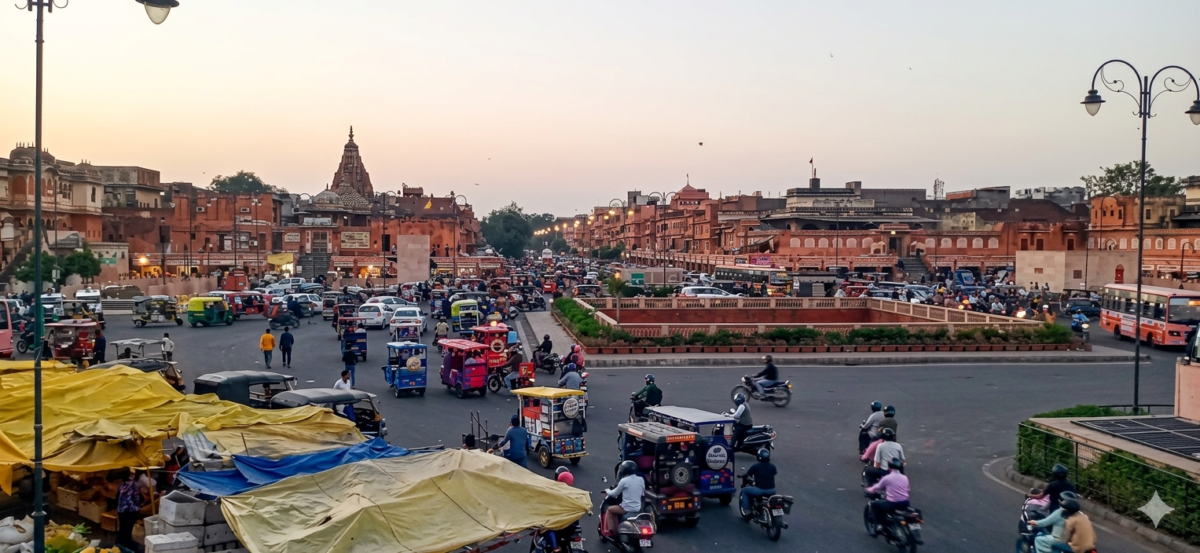
Experience the Pink City’s historic walled core on foot with a well-planned, 2–3 km self-guided Jaipur Heritage Walking Tour through Jaipur’s old bazaars, monuments, and markets. This heritage route (awarded UNESCO World Heritage status in 2019) takes about 1.5–2 hours of walking (longer if you linger in shops or take photos). Key highlights include the ornate city gates, bustling bazaars (Bapu, Johari), the famous Hawa Mahal (Palace of Winds), and the Govind Dev Ji Temple at City Palace. We outline step-by-step directions, timings, fees and transport tips below for a hassle‑free half-day tour (with options to extend into a full day).
- Distance & Duration: 2–3 km, 2–3 hours of walking/stops (flat terrain, easy pace).
- Difficulty: Easy (packed dirt/bricks, narrow alleys – wear good walking shoes). Watch for motorbikes, cycles and street traffic.
- Best Time: Mornings are cooler (start by 9:00 AM) or late afternoons. Weekdays early can avoid crowds. Jaipur’s tourist season is Oct–Mar. In summer, stick to early start or evening.
- Safety: Jaipur’s old town is generally safe by day, but stay alert in crowds. Keep valuables secure, carry water, and dress modestly (shoulders/knees covered in temples). Female travelers may consider avoiding empty lanes after dark.
- Accessibility: Not fully wheelchair-friendly – uneven streets and steps at some gates/temples. Most sidewalks are crowded.
Getting There: The Pink Line Metro ends at Chandpole (Ajmeri Gate) and Badi Chaupar stations in the old city. Both are within a 5–10 min walk of the route. Auto-rickshaws and cycle-rickshaws also operate in the walled city (insist on meters for autos). Parking is scarce; if driving, park outside a city gate.
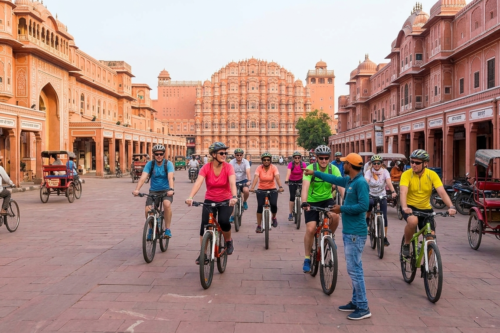
Also Explore: Cycle tour in Jaipur
Walking Route: Step-by-Step Directions
-
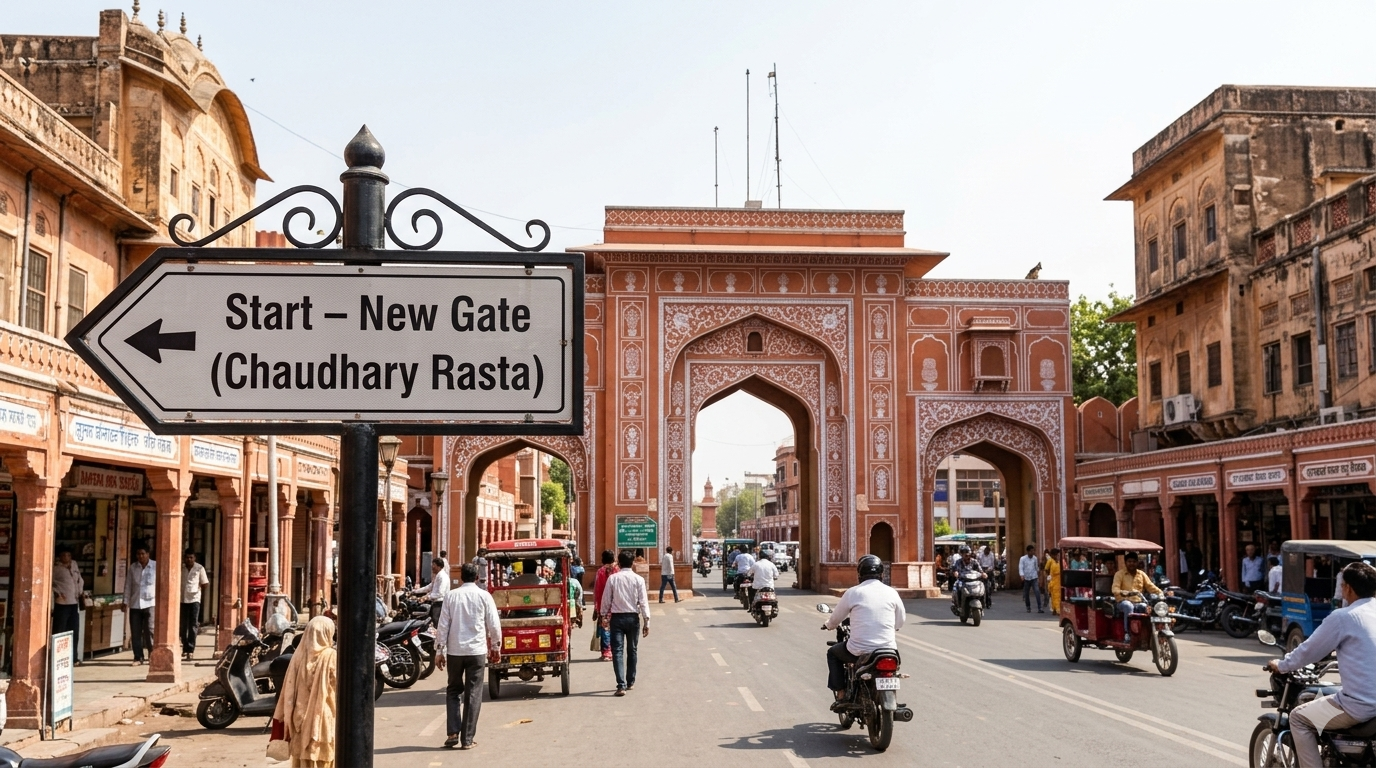
Start – New Gate (Chaudhary Rasta): Begin at New Gate, the modern red sandstone gate on Chaura Rasta (east side of Bapu Bazaar). Built in the 20th century as the “new” 9th gate, it showcases late Rajput/Mughal style. (This is 4 km from Jaipur Junction or a short drive from Ram Niwas Garden).
-
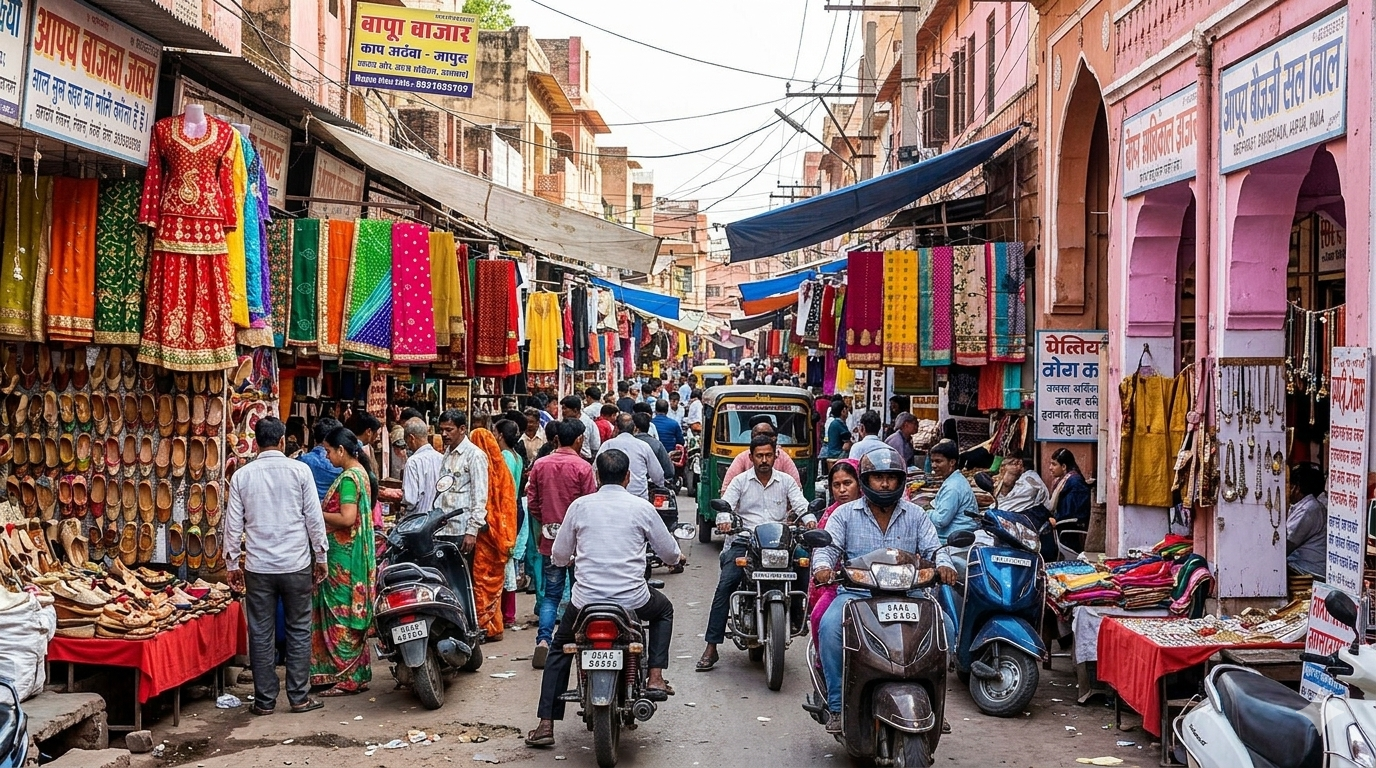
Bapu Bazaar (shopping street): Turn right into Bapu Bazaar, a lively pedestrian market (open ~10:30 AM–7:30 PM). Here you’ll find textiles, block-prints, Mojari leather shoes, and handicrafts. Local favorites: colored Bandhej (tie-dye) and Sanganeri prints, plus Rajasthani footwear (jaipuri Mojaris). There are also sweet stalls and chat shops serving falooda, jalebi and kulfi – great for a snack break.
-
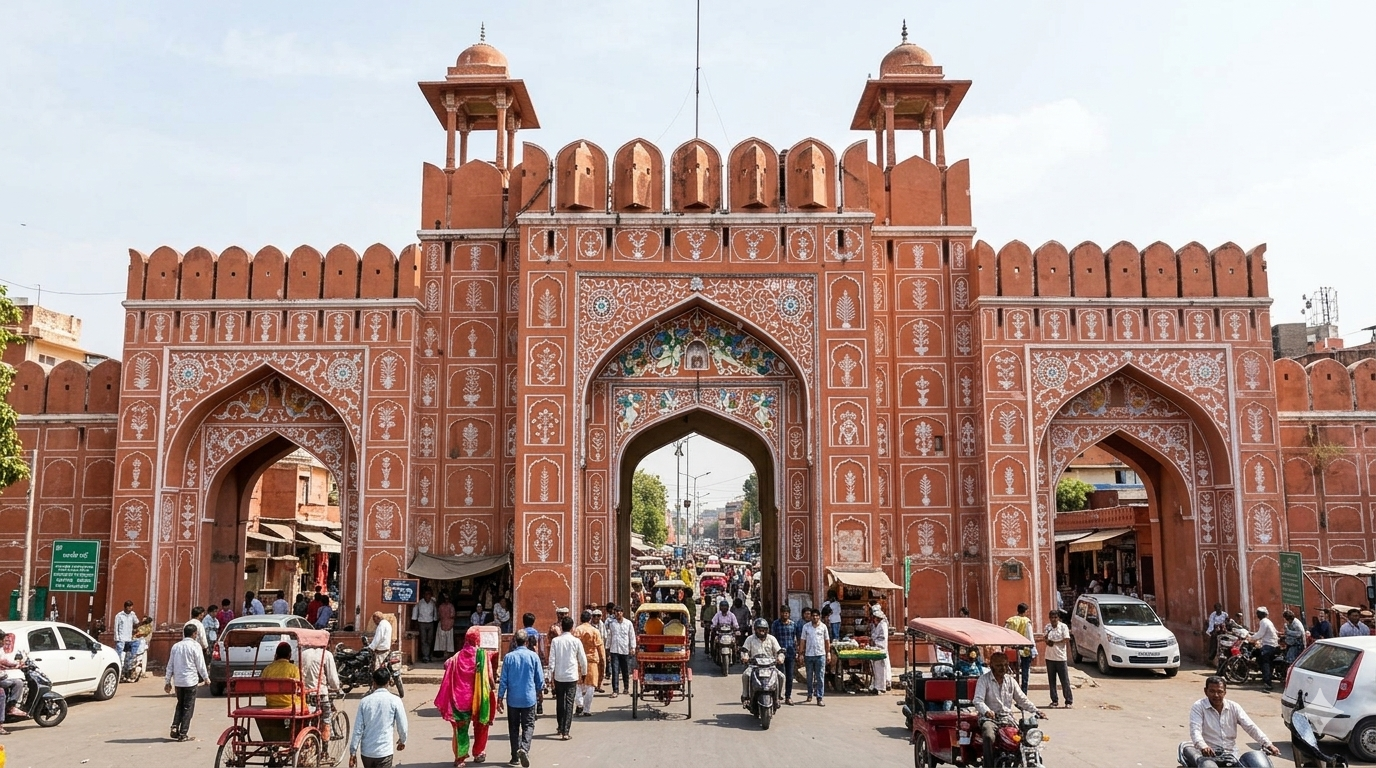
Sanganeri Gate (Shivpole): Continue through Bapu Bazaar (westbound) toward the end of the street. You’ll emerge at Sanganeri Gate (also called Shivpole), a large carved red gate that opens onto Johari Bazaar. Pause for photos: this gate (southern rampart, 18th century) was named for the nearby Sanganer road and a Shiv Temple, and it leads directly into Jaipur’s famed jewelry market.
-
Johari Bazaar & Haldion Ka Rasta: Inside the gate, turn right into Johari Bazaar, a covered colonnade market famous for jewelry (golconda diamonds, Kundan, Meenakari). Walk under the shaded arcades: on your right and left are hundreds of shops selling gold/silver jewelry, gems, textiles, and blue pottery. Notable side-lanes: Haldion ka Rasta (straight ahead) is known for gold and silver traders. If you need a break, stop at Laxmi Mishthan Bhandar (LMB) for Rajasthani sweets like kachori and dahi vada, a local favorite.
-
Ghee Walon Ka Rasta (Sweet Lane): Turn left off Johari Bazaar into the covered lane known as Ghee Walon ka Rasta. This narrow street is lined with old shops selling malpua, ghevar, gheund kachori and other Rajasthani sweets. Try a local treat (buy from Sambhar Fini or Rancho shops) or just enjoy the aromas. Notice the painted haveli doors on either side – Jaipur’s old town mansions.
-
Badi Chaupar Flower Market: At the end of Ghee Walon, you reach Badi Chaupar, a large junction. Here on one corner is the flower market (a riot of marigold garlands and roses each morning). Wander through and see stalls piled with orange marigolds and lotus blooms (the market is open early dawn through early evening). (If hungry, try tea and snacks at a nearby stall.)
-
Hawa Mahal (Palace of Winds): From Badi Chaupar walk northwest along the road (former Sireh Deori Bazaar). In about 200–300 m on the left, you’ll find the iconic Hawa Mahal – the five-story “Palace of the Winds” built in 1799. Enter the palace (open 9:00–16:30; Rs. 10 for Indians, Rs. 50 for foreign visitors) and climb ramps to the rooftop for city views. Even if you skip entry, be sure to photograph the lattice-pink facade from the front courtyard.
Shot: Wide-angle view of the ornate pink sandstone façade of Hawa Mahal (Palace of the Winds), Jaipur, taken at street level.
-
City Palace Area – Govind Dev Ji Temple (End): From Hawa Mahal, continue north to Sireh Deori Gate (the old town gate, now entrance to City Palace). Pass through into the City Palace courtyards. Turn right past Jaleb Chowk and head toward Govind Dev Ji Temple, the royal family’s tutelary Krishna shrine. The temple has no entry fee. (Devotees throng here; remove shoes and get in line for darshan. Check temple timing slots if visiting for aarti.) The tour ends here.
Shot: Colorful marigold garlands piled at Jaipur’s Badi Chaupar flower market (market stalls in background). This bustling market runs dawn noon daily.
Alternate/Extended Stops (Half-Day vs Full-Day): A focused half-day tour ends at Govind Dev Ji by late morning. To extend: continue to City Palace museum and Jantar Mantar (adjacent, entry fee ₹300/₹1,000); then enjoy lunch near Sansar Chandra Road. For a full day, add Amber Fort (Amer, 30 min away) or Nahargarh Fort (sunset at hilltop), or visit Albert Hall Museum and Ram Niwas Garden (south of old city) in the afternoon.
Table: Route Stops and Practical Details
| Stop | Highlights | Hours / Fee | Distance from Prev. |
|---|---|---|---|
| New Gate (Chaura Rasta) |
Last-built city gate (1940s), red sandstone arch. 360° old-town views. | Always open; free. | Start (0 km) |
| Bapu Bazaar (market) | Textile & handicraft shops; famous for bandhej prints, Mojari shoes and silver jadau jewelry. Try local falooda & kulfi stalls. | 10:30–19:30 daily; free. | ~0.1 km |
| Sanganeri Gate (Shivpole) | Ornate gate (19th c.) leading into Johari Bazaar; top of bazaar, photogenic arch. | Always open; free. | ~0.3 km |
| Johari Bazaar (market) | Premier jewelry bazaar (Kundan-Meena, polki, gemstones); also textiles and Laxmi Mishthan Bhandar sweets. | 10:00–23:00 daily; free. | ~0.1 km |
| Ghee Walon Ka Rasta (street) | Historic sweet street – malpua, ghevar, and other Rajasthani mithai. Havelis & painted doors line the lane. | Shops ~9:00–20:00; free. | ~0 km (same bazaar) |
| Badi Chaupar (Flower Market) | Dawn–noon marigold and lotus market; colorful local scene. | Early mornings, till ~10:00 am; free. | ~0.2 km |
| Hawa Mahal (Palace of Winds) | Pink sandstone facade of 953 latticed windows; view from palace interior. Archaeological museum inside. | 9:00–16:30 daily; Fee: Indians ₹10, Foreigners ₹50. | ~0.3 km |
| Govind Dev Ji Temple (City Palace) | Important Krishna temple (royal family deity) with daily aartis; very sacred local spot. | 4:15–12:00 & 16:00–20:30 daily; no fee. | ~0.8 km |
Distances are approximate walking distances along the route.
Shot: The Sanganeri Gate (red sandstone arch) in Jaipur’s old city; at its base the bazaars of Johari/Bapu await. (Wide shot capturing gate façade and street.)
Additional Tips & Nearby Sights
Walk Tips:
Bring water (shops and chai stalls are scarce mid-route), wear sunscreen and a hat. Restroom breaks: use mall or hotel restrooms at Bapu/Johari Bazaar. Avoid the tour during peak afternoon heat if not acclimated. Bargaining is normal in markets (more so for clothes/footwear than for jewelry).
Food & Refreshments:
Good snack stops include LMB (Laxmi Mishthan Bhandar) in Johari Bazaar (try kachori, samosa, sweets) and roadside chai or lassi stalls along the way. Bapu Bazaar has many local chaat and falooda shops. There is no shortage of street food: ginger tea (adrak chai), spicy samosas, and jalebi are widely available. (Street food is generally safe in these busy markets, but use discretion if you have a sensitive stomach.)
Half-Day vs Full-Day:
You can easily complete this heritage walk in 2–3 hours. For a half-day outing, combine it with lunch in the old city (plenty of family-run restaurants near Hawa Mahal) and perhaps a quick visit to Jantar Mantar or City Palace (both adjacent). For a full day, add Jaipur’s other attractions: Albert Hall Museum (south of walled city) or hilltop forts (Amber/Nahargarh; note transport required).
Nearby Attractions:
City Palace (museums and courtyards) and Jantar Mantar are steps from Govind Dev Ji (entry fees for City Palace ~₹300/₹1,000). Nakhelichand Mansion (handicraft museum) is 500m south of Govind Dev Temple. Amber Fort and Jal Mahal (lake palace) are 30–45 min away by taxi (or add in other tours). Nahargarh Fort offers sunset views over Jaipur.
-
Accessibility: Some lanes are cobbled or uneven; parts of Johari Bazaar have covered walkways. Busy streets have curbs and steps at gates and shops. The Govind Dev Ji Temple has a short stair entry; once inside, it’s a courtyard space (though during aarti it’s crowded).
-
Safety & Dress: Jaipur’s old city is safe by day. Exercise common sense: keep bags in front, avoid secluded alleys at night. Women may prefer modest dress (cover shoulders/legs) and staying in groups after dusk.
Contact & Booking
For a smooth and well-planned experience, always refer to trusted platforms like Heritage Tour India for the latest updates on Jaipur heritage walking tours. These sources provide accurate details about routes, timings, inclusions, and availability of both self-guided and guided tours.
Before booking, check what’s included, such as local guide support, entry fees, or food stops. Compare multiple tour options to find one that fits your budget and schedule. If you prefer a self-guided Jaipur walk, download maps or itineraries in advance and note key landmarks. Also, confirm meeting points, duration, and cancellation policies to avoid last-minute confusion.