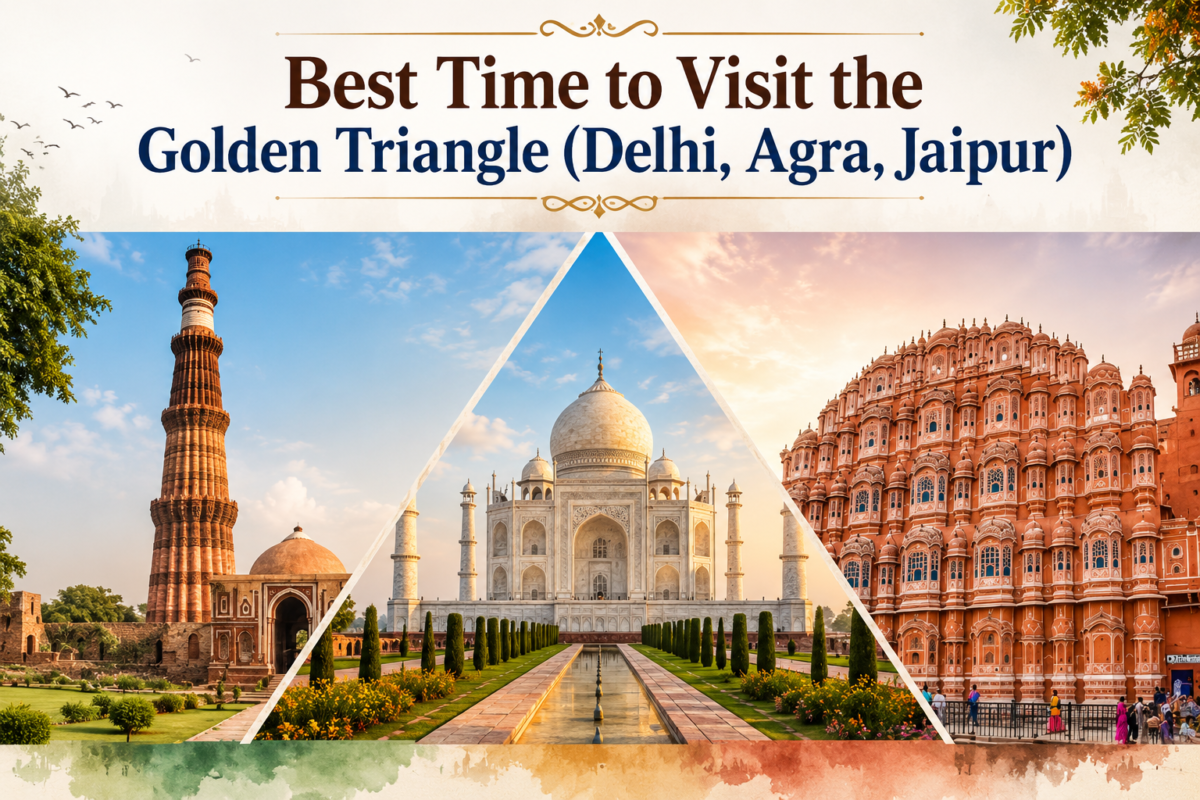
Plan your India Golden Triangle Tour perfectly with this comprehensive month-by-month guide
The Golden Triangle—connecting Delhi, Agra, and Jaipur—is India‘s most iconic tourist circuit. But choosing the best time to visit India Golden Triangle can make or break your experience. Visit during scorching summer or monsoon flooding, and you might struggle. Visit during the perfect window, and you‘ll witness the Taj Mahal glowing at sunrise, Jaipur’s palaces turning pinker with dawn, and Delhi’s bustling streets in pleasant weather.
This guide answers all your questions: best time to visit Delhi, best time to visit Agra, best time to visit Jaipur, best time to visit Golden Triangle Tour India , and even the best time to visit Taj Mahal. We also cover nearest places and tourist places for each season, festivals, crowd levels, and insider tips. Whether you‘re booking an India Golden Triangle tour for family, honeymoon, or solo adventure, read on.
When is the Best Time to Visit the Golden Triangle?
October to mid-April is the best time to visit the Golden Triangle. During these months, temperatures range from 22°C to 32°C (72°F to 90°F) – pleasant for sightseeing, walking through forts, and enjoying outdoor activities.
-
Peak Season: November to February (coolest weather, but fog in Agra/Delhi)
-
Shoulder Season: October and March (ideal balance of weather and crowds)
-
Off Season: April to June (extremely hot, up to 45°C)
-
Monsoon Season: July to September (humid, occasional floods, but lush greenery)
However, the “best” time varies by city and what you want to experience. Let‘s dive deep month by month, city by city.
Golden Triangle Weather Overview (Monthly Chart)
| Month | Delhi (Min/Max °C) | Agra (Min/Max °C) | Jaipur (Min/Max °C) | Rainfall (mm) | Crowds | Verdict |
|---|---|---|---|---|---|---|
| Jan | 7 / 21 | 7 / 22 | 8 / 22 | 19 | High | Cold, foggy – good for palaces, bad for Taj views |
| Feb | 10 / 24 | 10 / 25 | 10 / 26 | 15 | High | Still cool, fog reduces by late Feb |
| Mar | 15 / 30 | 15 / 32 | 16 / 33 | 15 | Medium-High | Excellent – warm days, clear skies |
| Apr | 21 / 36 | 23 / 38 | 23 / 38 | 8 | Medium | Hot, but bearable for early morning sightseeing |
| May | 25 / 39 | 25 / 42 | 26 / 41 | 17 | Low | Very hot – only for heat-tolerant travelers |
| Jun | 28 / 39 | 28 / 42 | 28 / 40 | 53 | Low | Pre-monsoon heat & humidity |
| Jul | 27 / 35 | 27 / 36 | 27 / 35 | 220 | Low | Monsoon – humid, heavy rains possible |
| Aug | 26 / 33 | 26 / 34 | 25 / 33 | 257 | Low | Wettest month – floods in some areas |
| Sep | 24 / 34 | 24 / 35 | 24 / 34 | 126 | Low-Medium | Monsoon retreats – greenery, but still humid |
| Oct | 19 / 33 | 19 / 35 | 20 / 34 | 24 | Medium | Excellent – post-monsoon freshness, festivals |
| Nov | 13 / 28 | 13 / 30 | 14 / 30 | 5 | High | Pleasant, clear skies – peak season begins |
| Dec | 8 / 23 | 8 / 24 | 9 / 24 | 8 | High | Cold, foggy – festive vibe but low visibility |
Best Time to Visit Delhi – The Capital‘s Seasons
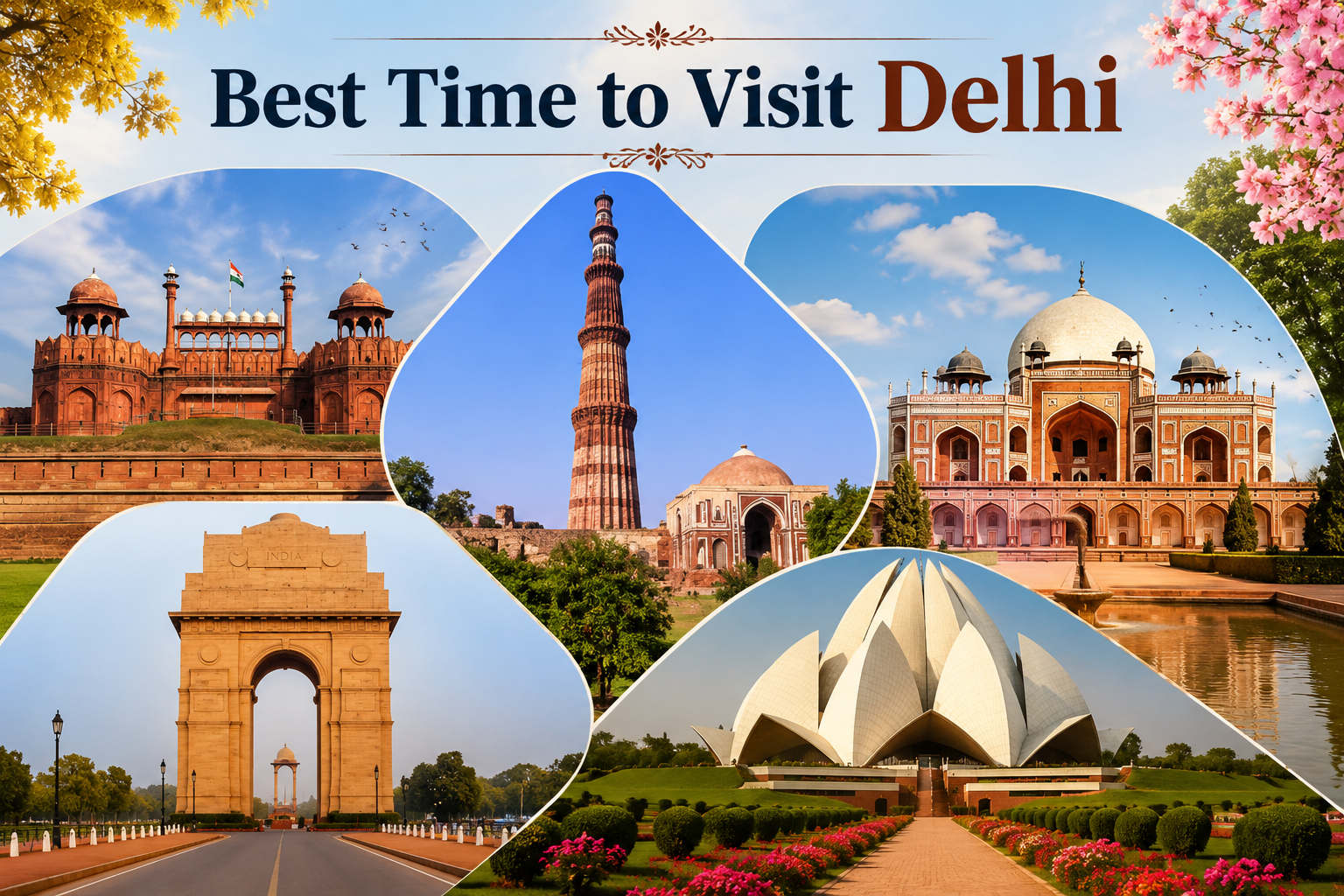
Delhi is often the starting point of any India Golden Triangle tour. The best time to visit Delhi is October to March.
Delhi in Winter (October to March)
-
Temperature: 7°C to 28°C
-
Weather: Pleasant to cold, foggy mornings (Dec-Jan)
-
Pros: Perfect for outdoor sightseeing – Red Fort, Qutub Minar, Humayun‘s Tomb, India Gate. Festivals like Diwali (Oct-Nov) and Holi (March) are magical.
-
Cons: December-January fog can delay flights and trains. Air pollution peaks in November.
-
Nearest tourist places in winter:
-
Agra (200 km): Taj Mahal, Agra Fort (but expect fog)
-
Jaipur (270 km): Amber Fort, City Palace
-
Mathura/Vrindavan (150 km): Krishna‘s birthplace – festivals are vibrant in winter
-
Neemrana Fort (120 km): Heritage hotel and zip-lining
-
Delhi in Summer (April to June)
-
Temperature: 25°C to 45°C
-
Weather: Extremely hot, dry, dusty
-
Pros: Low season – cheap flights and hotels. Fewer crowds at monuments.
-
Cons: Sightseeing is unbearable between 11 AM and 4 PM. Heatstroke risk.
-
Nearest tourist places in summer:
-
Agra (same heat) – not recommended
-
Jaipur (same heat) – but hill forts offer some breeze
-
Mount Abu (750 km) – only hill station in Rajasthan (cooler)
-
Delhi in Monsoon (July to September)
-
Temperature: 26°C to 35°C, high humidity
-
Weather: Intermittent heavy rains, waterlogging in some areas
-
Pros: Lush greenery at Lodhi Garden, reduced dust. Romantic ambiance.
-
Cons: Humid, mosquito-borne diseases risk. Outdoor plans may be cancelled.
-
Nearest tourist places in monsoon:
-
Agra (Taj Mahal in rain looks spectacular)
-
Bharatpur Bird Sanctuary (200 km) – migratory birds start arriving in September
-
Verdict for Delhi: Visit between mid-October and mid-March. Avoid December 25-January 5 if you fear fog delays.
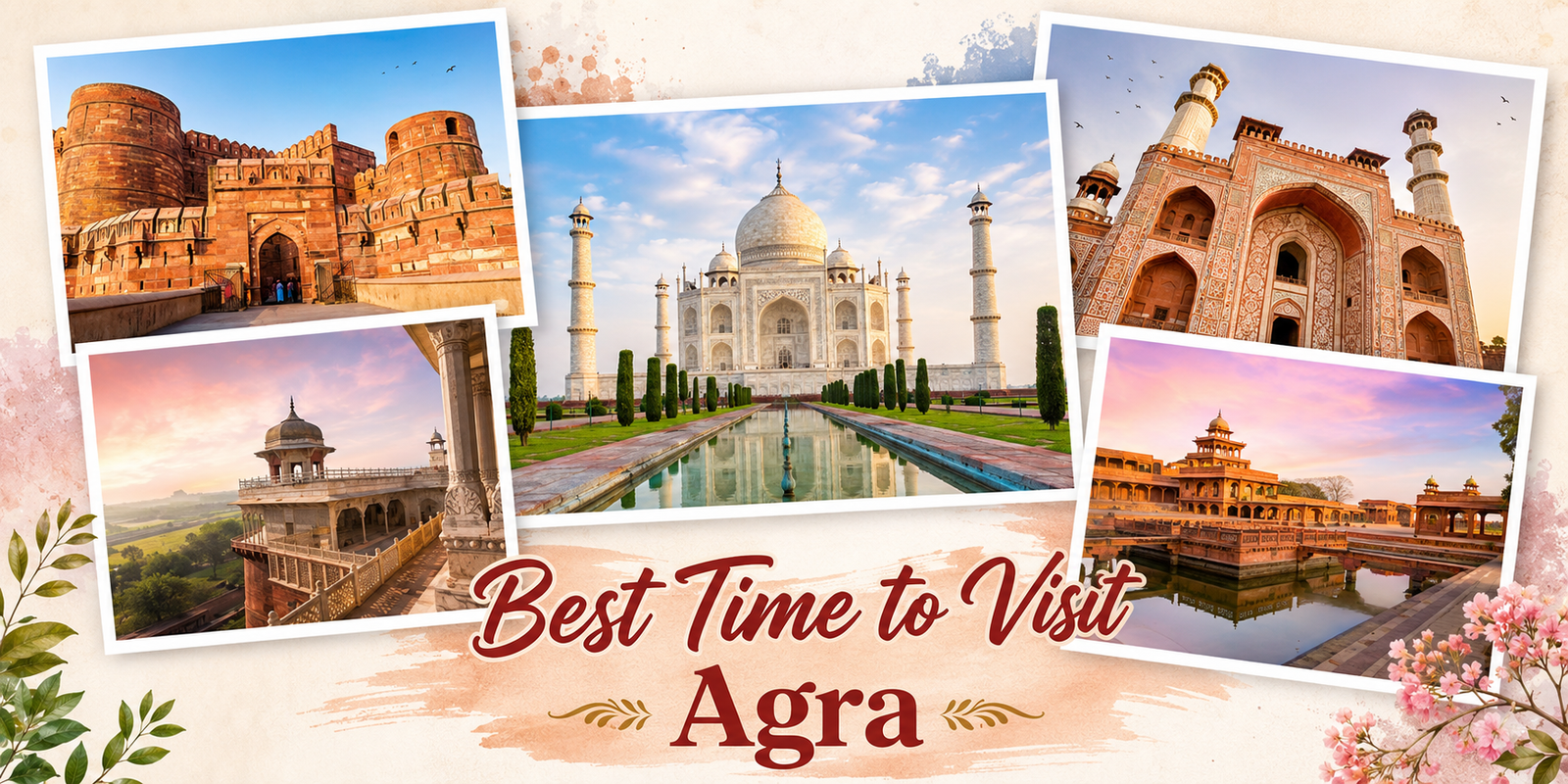
Best Time to Visit Agra | Home of the Taj Mahal
The best time to visit Agra is November to February for cool weather, but beware of fog. The best time to visit Taj Mahal specifically is late October, early November, or February to March – when skies are clear and mornings are crisp.
Agra in Winter (October to March)
-
Temperature: 7°C to 32°C
-
Weather: Cool days, chilly nights (Dec-Jan lows of 2-5°C). Dense fog in December-January.
-
Pros: Perfect for sunrise at the Taj Mahal (if no fog). Agra Fort and Fatehpur Sikri are comfortable to explore. Taj Mahotsav (10-day festival in February) showcases handicrafts, food, and culture.
-
Cons: Peak crowds at the Taj Mahal – expect long queues. Fog can completely hide the Taj some mornings. Hotel prices double.
-
Nearest tourist places in winter:
-
Fatehpur Sikri (40 km): Buland Darwaza, Panch Mahal – best visited in cool weather
-
Mathura & Vrindavan (60 km): Winter festivals, especially Holi (March)
-
Bharatpur Bird Sanctuary (55 km): October-March is peak birding season (Siberian cranes)
-
Sikandara (10 km): Tomb of Emperor Akbar – peaceful in winter mist
-
Agra in Summer (April to June)
-
Temperature: 23°C to 45°C+ (May hottest)
-
Weather: Scorching, dry, intense sun
-
Pros: Very few tourists – you‘ll have the Taj almost to yourself in early morning. Hotel and flight deals (up to 50% off).
-
Cons: Heat exhaustion risk. You can only sightsee from sunrise to 9 AM and after 5 PM. Midday is dangerous.
-
Nearest tourist places in summer:
-
None nearby are cooler – best to retreat to air-conditioned hotels. Consider Udaipur (650 km) or Mount Abu (700 km) if you must travel.
-
Agra in Monsoon (July to September)
-
Temperature: 25°C to 35°C, high humidity
-
Weather: Moderate to heavy rain (August wettest)
-
Pros: The Taj Mahal in rain is a rare, stunning sight – marble gleams. Fewer crowds. Greenery around Agra Fort.
-
Cons: Humid, slippery marble at the Taj (you still wear shoe covers). Some monuments may be waterlogged. Mosquitoes.
-
Nearest tourist places in monsoon:
-
Keoladeo National Park (Bharatpur) – becomes lush, though bird season starts late September
-
Fatehpur Sikri – dramatic cloudy skies for photography
-
Verdict for Agra: The best time to visit Agra is February, March, October, or November. Avoid December-January if you want clear Taj views. Avoid April-June if you can‘t handle extreme heat.
Pro Tip for Taj Mahal Visit by Season:
-
Winter (Dec-Jan): Choose afternoon visit (11 AM – 2 PM) – fog usually burns off by then.
-
Summer (Apr-Jun): Visit at sunrise (5:30-6:30 AM) – the coolest time, also the most beautiful light.
-
Monsoon (Jul-Sep): Carry an umbrella – the Taj reflection in puddles makes unique photos.
-
Best overall: Late October (post-Diwali) – clear skies, pleasant temps, and festive atmosphere.
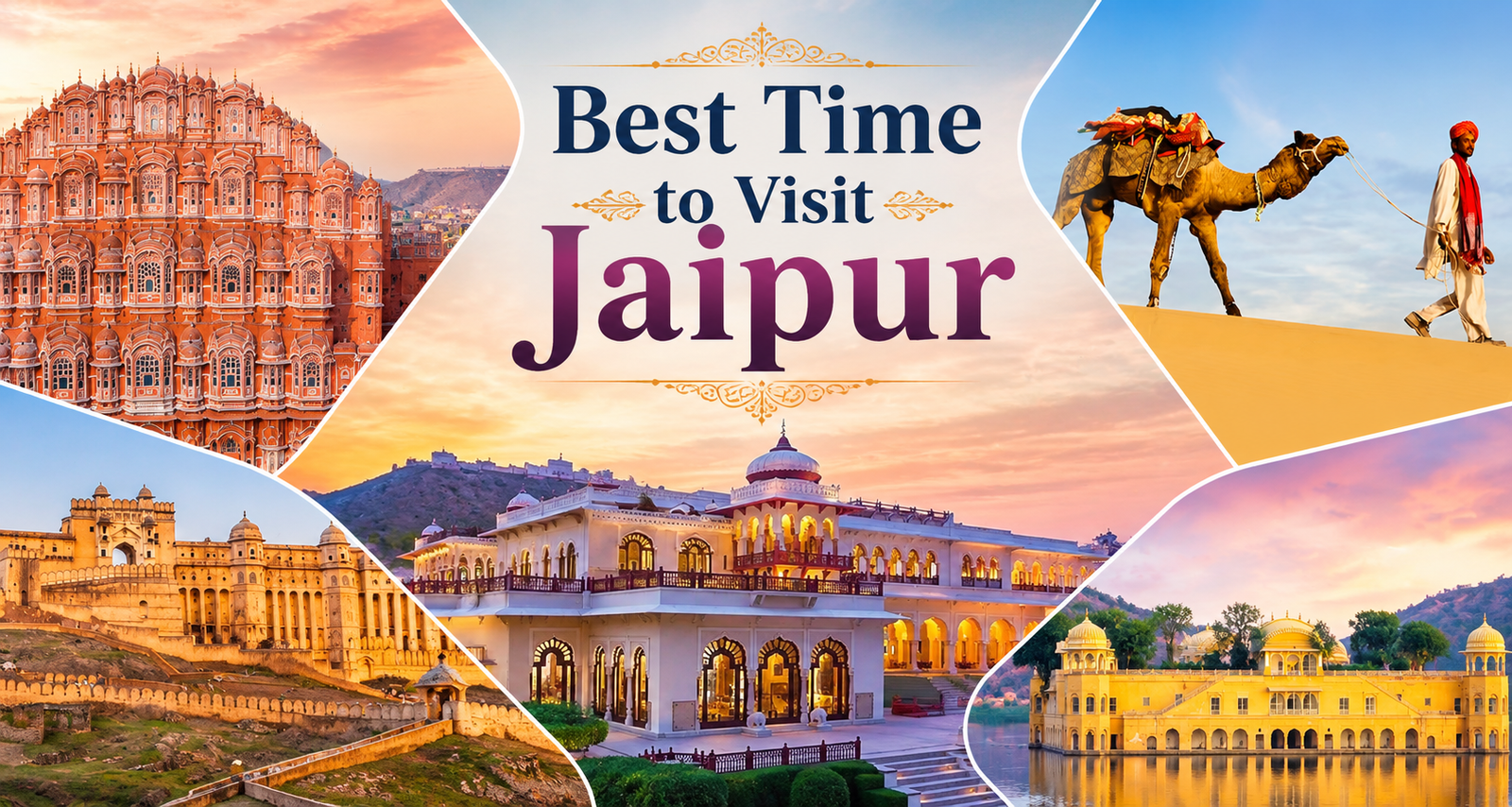
Best Time to Visit Jaipur – The Pink City
The best time to visit Jaipur is November to March, though October and February-March are ideal.
Jaipur in Winter (October to March)
-
Temperature: 8°C to 33°C
-
Weather: Sunny days, cool nights. No fog (unlike Delhi/Agra).
-
Pros: Perfect for visiting Amber Fort, Nahargarh Fort (sunset views), City Palace, Jantar Mantar, and Hawa Mahal. Jaipur‘s winter festivals – Jaipur Literature Festival (January) and Kite Festival (January 14). Pleasant for bazaars (Johari Bazaar, Bapu Bazaar).
-
Cons: Peak season – hotels cost double, monuments crowded.
-
Nearest tourist places in winter:
-
Amer Fort (11 km) – morning elephant rides (ethical alternatives available)
-
Jaigarh Fort (15 km) – home to the world‘s largest wheel cannon
-
Nahargarh Fort (15 km) – stunning sunset over the Pink City
-
Galta Ji (Monkey Temple, 10 km) – natural springs and hundreds of monkeys
-
Sambhar Lake (80 km) – India‘s largest salt lake, migratory birds (winter)
-
Pushkar (150 km) – holy town, famous Pushkar Camel Fair (November)
-
Jaipur in Summer (April to June)
-
Temperature: 25°C to 42°C
-
Weather: Very hot, dry winds (loo)
-
Pros: Low season – great discounts. Fewer tourists at Amer Fort.
-
Cons: Afternoon sightseeing is exhausting. Most outdoor activities restricted to early morning or after sunset.
-
Nearest tourist places in summer:
-
Abhaneri (95 km) – Chand Baori stepwell (deep and relatively cooler)
-
Ranthambore National Park (160 km) – animals gather at waterholes (good tiger sightings in summer), but very hot
-
Mount Abu (500 km) – only Rajasthan hill station, pleasant even in summer
-
Jaipur in Monsoon (July to September)
-
Temperature: 24°C to 35°C, humid
-
Weather: Moderate rain, greenery returns to the Aravalli hills
-
Pros: Lush landscapes around Amber Fort. Fewer crowds. Beautiful cloudy skies for photography.
-
Cons: Humid, roads may be waterlogged. Some forts can be slippery.
-
Nearest tourist places in monsoon:
-
Bharatpur Bird Sanctuary (180 km) – beginning of bird season
-
Ranthambore (160 km) – park closed for monsoon (July-August), reopens October
-
Verdict for Jaipur: Unlike Delhi and Agra, Jaipur rarely has fog. So December-January is fine here. The absolute best months are February, March, October, and November.
Month-by-Month Detailed Guide for Your India Golden Triangle Tour
January – Cold & Foggy (But Festive)
-
Delhi: 7-21°C – fog disrupts flights/trains early morning. Republic Day (Jan 26) parade.
-
Agra: 7-22°C – dense fog hides Taj until 10 AM. Best Taj visit time: 11 AM – 2 PM.
-
Jaipur: 8-22°C – clear skies, pleasant. Jaipur Literature Festival (world‘s largest literary festival).
-
Pros: New Year‘s vibe, bonfires, winter cuisine (gajar ka halwa).
-
Cons: Fog in Delhi and Agra – not ideal for first-time Taj visitors.
-
Nearest places: Bharatpur Bird Sanctuary (peak birding), Mathura (Janmashtami preparations).
February – Fog Lifts, Weather Improves
-
Delhi: 10-24°C – fog reduces significantly by mid-Feb.
-
Agra: 10-25°C – still cool mornings, but Taj visible. Taj Mahotsav (10-day craft fair).
-
Jaipur: 10-26°C – perfect weather. Kite flying continues.
-
Pros: One of the best months for Golden Triangle. Clear skies, comfortable temperatures.
-
Cons: Still need jackets, especially at night.
-
Nearest places: Fatehpur Sikri (ideal weather), Neemrana Fort.
March – The Sweet Spot
-
Delhi: 15-30°C – warm days, cool evenings. Holi (color festival) – usually mid-March.
-
Agra: 15-32°C – excellent for sunrise Taj. No fog.
-
Jaipur: 16-33°C – best month for elephant rides at Amer Fort (ethical morning slots).
-
Pros: Ideal temperatures, festivals (Holi), clear skies.
-
Cons: Holi can make travel messy (colored powders). Book accommodation 3 months in advance.
-
Nearest places: Mathura & Vrindavan (Holi epicenter – a once-in-lifetime experience), Pushkar.
April – Getting Hot
-
Delhi: 21-36°C – heat begins. Early morning sightseeing only.
-
Agra: 23-38°C – hot. Taj visit only at sunrise (5:30 AM).
-
Jaipur: 23-38°C – similar heat. Forts become ovens by noon.
-
Pros: Low season prices – great deals on luxury hotels. Fewer tourists.
-
Cons: Uncomfortable for walking. Must carry water, hat, sunscreen.
-
Nearest places: Mount Abu (hill station, 700 km – consider a detour if you must travel in April).
May – Peak Summer (Avoid if possible)
-
Delhi: 25-39°C – heatwaves common (up to 45°C).
-
Agra: 25-42°C – among hottest months. Taj Mahal‘s marble burns bare feet (wear socks).
-
Jaipur: 26-41°C – afternoon temperatures unbearable.
-
Pros: Very cheap flights and hotels. Taj at sunrise is uncrowded.
-
Cons: Risk of heat exhaustion, dehydration. Most locals stay indoors 11 AM – 5 PM.
-
Nearest places: Only Mount Abu or hill stations in Uttarakhand (Rishikesh, 400 km).
June – Pre-Monsoon Humidity
-
Delhi: 28-39°C – hot and humid, dust storms possible.
-
Agra: 28-42°C – similar. Occasional pre-monsoon showers bring relief.
-
Jaipur: 28-40°C – slightly less humid.
-
Pros: Lowest prices of the year.
-
Cons: Still very hot, plus humidity. Not recommended for leisurely Golden Triangle tour.
-
Nearest places: None nearby. Consider delaying trip to October.
July & August – Monsoon Season (Wettest Months)
-
Delhi: 26-35°C (July), 26-33°C (Aug) – heavy rains, waterlogging common.
-
Agra: 27-36°C (July), 26-34°C (Aug) – Taj Mahal open but slippery.
-
Jaipur: 27-35°C (July), 25-33°C (Aug) – less rain than Delhi, but humidity.
-
Pros: Lush green landscapes. Dramatic cloudy photos of monuments. Very few tourists.
-
Cons: Outdoor plans can be ruined by downpours. Flooding in low-lying areas. Ranthambore National Park closed (July-Aug).
-
Nearest places: Bharatpur (greenery, but birds not yet arrived). Fatehpur Sikri (rain-washed red sandstone looks beautiful).
September – Monsoon Retreats
-
Delhi: 24-34°C – rain decreases, still humid.
-
Agra: 24-35°C – similar. Last week onward becomes drier.
-
Jaipur: 24-34°C – pleasant evenings return.
-
Pros: Greenery lasts, crowds still low. Good month for budget travel.
-
Cons: Some days still rainy. Humidity can be uncomfortable.
-
Nearest places: Keoladeo National Park (birds begin arriving late September), Ranthambore (reopens October 1 – plan accordingly).
October – Post-Monsoon Perfection
-
Delhi: 19-33°C – clear skies, pleasant. Diwali (festival of lights) usually October/November.
-
Agra: 19-35°C – excellent Taj viewing. No fog, no heat.
-
Jaipur: 20-34°C – ideal for all sightseeing.
-
Pros: One of the top two months. Festivals (Dussehra, Diwali). Monsoon freshness still present.
-
Cons: Crowds begin to increase. Diwali means travel chaos (book early).
-
Nearest places: Pushkar Camel Fair (October/November – exact dates vary). Ranthambore (reopens – great time for tiger sightings as water sources dry up).
November – Peak Season Begins
-
Delhi: 13-28°C – pleasant days, cool nights. Air pollution levels rise (post-Diwali).
-
Agra: 13-30°C – Taj crowds increase. Night viewing on full moon dates.
-
Jaipur: 14-30°C – still perfect weather.
-
Pros: Blue skies, comfortable for all activities. Wedding season (you might see lavish processions).
-
Cons: Peak prices. Delhi‘s smog can be hazardous (check AQI before traveling).
-
Nearest places: Bharatpur (migratory birds arrive fully), Mathura/Vrindavan (post-Diwali festivities).
December – Cold & Foggy Again
-
Delhi: 8-23°C – cold, dense fog in mornings and evenings. Christmas and New Year‘s celebrations.
-
Agra: 8-24°C – similar fog. Taj Mahal may be invisible until 10 AM.
-
Jaipur: 9-24°C – clear and crisp (no fog).
-
Pros: New Year‘s vibe, bonfire dinners at heritage hotels. Christmas decorations.
-
Cons: Fog disrupts travel (flights cancelled, trains delayed). Taj views disappointing for early risers.
-
Nearest places: Jaipur (escape Delhi fog), Neemrana (heritage fort with less fog), Bharatpur (pleasant birding).
Best Time to Visit Golden Triangle India for Specific Interests
For Photography
-
Best months: February, March, October, November
-
Why: Clear skies, golden sunrise/sunset light, no fog or rain.
-
Avoid: December-January (fog), July-August (rain/clouds).
For Avoiding Crowds
-
Best months: April-June (summer) or July-September (monsoon)
-
Trade-off: Extreme heat or humidity. But you‘ll have the Taj Mahal almost alone.
-
Tip: If going in summer, hire a car with AC and do sightseeing only at sunrise and late afternoon.
For Festivals
-
Diwali (Oct/Nov): Spectacular in Jaipur and Delhi (lights, fireworks). But book 3-6 months ahead.
-
Holi (March): Best experienced in Mathura/Vrindavan (near Agra) or Jaipur. Colors, music, bhang.
-
Taj Mahotsav (February): Agra‘s 10-day craft and culture festival.
-
Jaipur Literature Festival (January): World‘s largest free lit fest.
-
Pushkar Camel Fair (Oct/Nov): Near Jaipur – unique cultural experience.
For Tiger Spotting (Ranthambore extension)
-
Best time: October to March (park closed July-August)
-
Optimal: April-May – intense heat drives tigers to waterholes, increasing sightings. But be prepared for 40°C+.
For Honeymooners
-
Best months: October, February, March
-
Why: Pleasant weather for romantic walks, sunset at Taj Mahal, boat ride on Lake Pichola (if you extend to Udaipur).
-
Avoid: December-January fog (can‘t see Taj), April-June heat.
Nearby Tourist Places to Include in Your Golden Triangle Tour
| Destination | From | Distance | Best Season | Why Visit |
|---|---|---|---|---|
| Mathura & Vrindavan | Agra | 60 km | Oct-Mar (Holi in March) | Krishna temples, ghats, festivals |
| Fatehpur Sikri | Agra | 40 km | Oct-Mar | UNESCO site – Buland Darwaza, abandoned Mughal capital |
| Bharatpur Bird Sanctuary | Agra | 55 km | Oct-Feb (winter) | Siberian cranes, over 350 bird species |
| Neemrana Fort | Delhi | 120 km | Oct-Mar | Heritage hotel, zip-lining, stepwells |
| Ranthambore National Park | Jaipur | 160 km | Oct-Jun (best Apr-May for tigers) | Tiger safaris, ancient fort |
| Pushkar | Jaipur | 150 km | Oct-Mar (Nov for camel fair) | Holy lake, Brahma Temple, camel fair |
| Abhaneri (Chand Baori) | Jaipur | 95 km | Oct-Mar | Ancient stepwell – 3,500 steps |
| Sambhar Lake | Jaipur | 80 km | Nov-Feb (winter birds) | Salt lake, flamingos |
| Mount Abu | Jaipur | 500 km | Mar-Jun (summer retreat) | Only Rajasthan hill station – Dilwara Temples |
| Udaipur (extended tour) | Jaipur | 400 km | Sep-Mar | City of Lakes – romantic boat rides |
India Golden Triangle Tour – Itineraries by Season
Winter Itinerary (November-February) – 7 Days
Focus: Festivals, comfortable sightseeing, night viewing at Taj (if full moon)
-
Day 1-2: Delhi – Red Fort, Qutub Minar, Chandni Chowk (morning), India Gate (evening)
-
Day 3: Drive to Agra (3h) – Agra Fort, Mehtab Bagh for sunset
-
Day 4: Taj Mahal at sunrise (enter at 6:30 AM), then Fatehpur Sikri en route to Jaipur
-
Day 5-6: Jaipur – Amber Fort, City Palace, Hawa Mahal, Jantar Mantar, bazaars
-
Day 7: Drive back to Delhi or fly out from Jaipur
Pro tip: In December-January, schedule Taj Mahal for 11 AM (fog clears). Don‘t book sunrise if you want clear views.
Summer Itinerary (April-June) – 5 Days (shortened)
Focus: Early mornings, air-conditioned transport, indoor attractions
-
Day 1: Delhi – visit only Humayun‘s Tomb (morning), National Museum (air-conditioned)
-
Day 2: Drive to Agra early (6 AM) – Taj Mahal (7-9 AM), then Agra Fort (indoor sections)
-
Day 3: Drive to Jaipur (4h) – stop at Chand Baori stepwell (deep, cooler microclimate)
-
Day 4: Jaipur – City Palace (indoor), Jantar Mantar (open but hot), Albert Hall Museum (AC)
-
Day 5: Amber Fort at sunrise (6-8 AM) – then air-conditioned car to Delhi
Pro tip: Carry neck fans, chilled water in insulated bottles, and wear white cotton.
Monsoon Itinerary (July-September) – 6 Days
Focus: Lush landscapes, indoor photography, flexible schedule
-
Day 1: Delhi – indoor attractions: Akshardham Temple (inspect security), Crafts Museum
-
Day 2: Delhi to Agra – expect rain delays. Visit Taj Mahal (the rain makes marble glow)
-
Day 3: Agra – Fatehpur Sikri (red sandstone looks dramatic against grey skies)
-
Day 4: Drive to Jaipur – stop at Abhaneri (stepwell – water looks eerie in rain)
-
Day 5: Jaipur – City Palace, Jawahar Kala Kendra (indoor art galleries)
-
Day 6: Jaipur – Amber Fort (careful on wet steps), then local markets (covered)
Pro tip: Carry raincoats (umbrellas may not be allowed inside Taj). Waterproof shoes essential.
Frequently Asked Questions
Q: What is the absolute best month for the Golden Triangle?
A: March and October – perfect weather, clear skies, minimal fog, and vibrant festivals (Holi in March, Diwali in October).
Q: Is December a good time to visit the Taj Mahal?
A: Only if you don‘t mind dense fog. The Taj may be invisible until 10 AM. Afternoon visits are better. Jaipur and Delhi are fine in December.
Q: Can I visit the Golden Triangle in summer?
A: Yes, but only if you‘re heat-tolerant. Plan all outdoor activities for sunrise (5:30-8:30 AM) and after 5 PM. Spend midday in AC hotels or museums. You‘ll save money (30-50% off) and avoid crowds.
Q: When is the best time for Taj Mahal night viewing?
A: On full moon nights (plus two nights before/after). Check ASI website for dates – usually 5-6 nights per month. Book tickets 24 hours in advance.
Q: Which month has the best tiger sightings at Ranthambore?
A: April and May (peak summer) – tigers come to waterholes frequently. But it‘s extremely hot. October-November also good.
When Should You Go?
After this detailed analysis, here‘s your cheat sheet:
| Priority | Best Months | Why |
|---|---|---|
| Perfect weather + clear Taj views | March, October | No fog, not too hot, festivals |
| Avoiding crowds + budget travel | April, May, July, August | Off-season deals – but extreme heat or rain |
| Festivals (Diwali, Holi, Lit Fest) | October/November (Diwali), March (Holi), January (Lit Fest) | Cultural immersion |
| Photography | February, March, October, November | Clear skies, golden light |
| Tiger spotting | April, May, October, November | Waterhole sightings (summer) or post-monsoon |
| Honeymoon | October, February, March | Pleasant weather, romantic sunsets |
Our top recommendation: Plan your India Golden Triangle tour for late October to mid-November or February to mid-March. You‘ll experience the best weather, clear Taj Mahal views, vibrant festivals, and comfortable sightseeing.
No matter when you choose, the Golden Triangle will dazzle you. Book your flights, pack accordingly, and get ready for an unforgettable journey through India‘s royal, historical, and cultural heart.
For more travel inspiration, check out our other tours and guides:
Taj Mahal Trip 2026 | Rajasthan Heritage Tour | Jaipur to Agra Distance | Jaipur to Ranthambore Distance | Jaipur to Jaisalmer Distance | Jaipur to Jodhpur distance by Road | Jaipur to Pushkar Distance | Jaipur to Udaipur Distance | Best Tour Guide in Jaipur | Heritage Tour India| Top 10 Forts and Palaces in Rajasthan | Pink city jaipur at night tour | Jaipur to Khatu Shyam Distance | Jaisalmer Tour Package | Jaipur Cycling Tour | Heritage Tour Jodhpur | Kerala Cultural Tour Package | Spiritual Tours in India | Rajasthan Cultural Tour | Cultural Tour Package India | Jaisalmer Desert Safari | Rajasthan Heritage Tour | Golden Triangle Tour by car.